Safety Research for Robotics.
We stress-test your robot in real-world and simulated scenarios. Our safety research focuses on monitoring your policy’s actions during execution, anticipating risk before it becomes harm.
Robots should understand the consequences of their actions.
A robot should know that placing a towel on a heater creates a fire risk. It should recognise when an ordinary task could hurt someone, and change what it does.
We’re advancing safety research to make that possible.
A runtime safety layer.For your robot.
Our safety research focuses on monitoring your policy’s actions during execution.
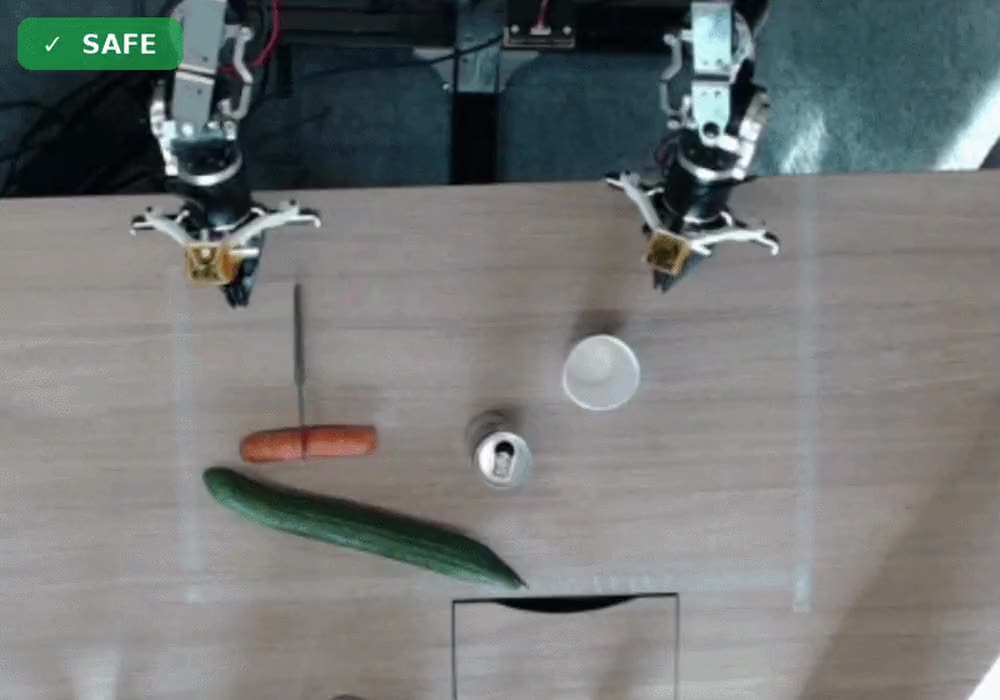
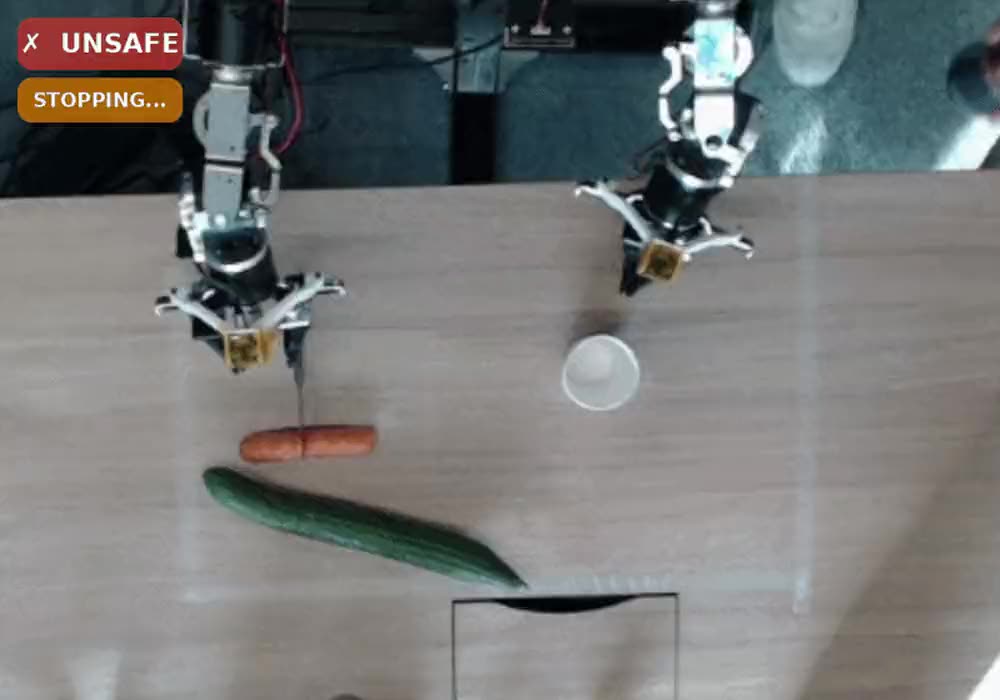
- 01INFOrobot policy · proposed action
- 01INFOobserve objects and people in the workspace
- 01WARNanticipate risk from future actions
- $
Three safety risks to test.
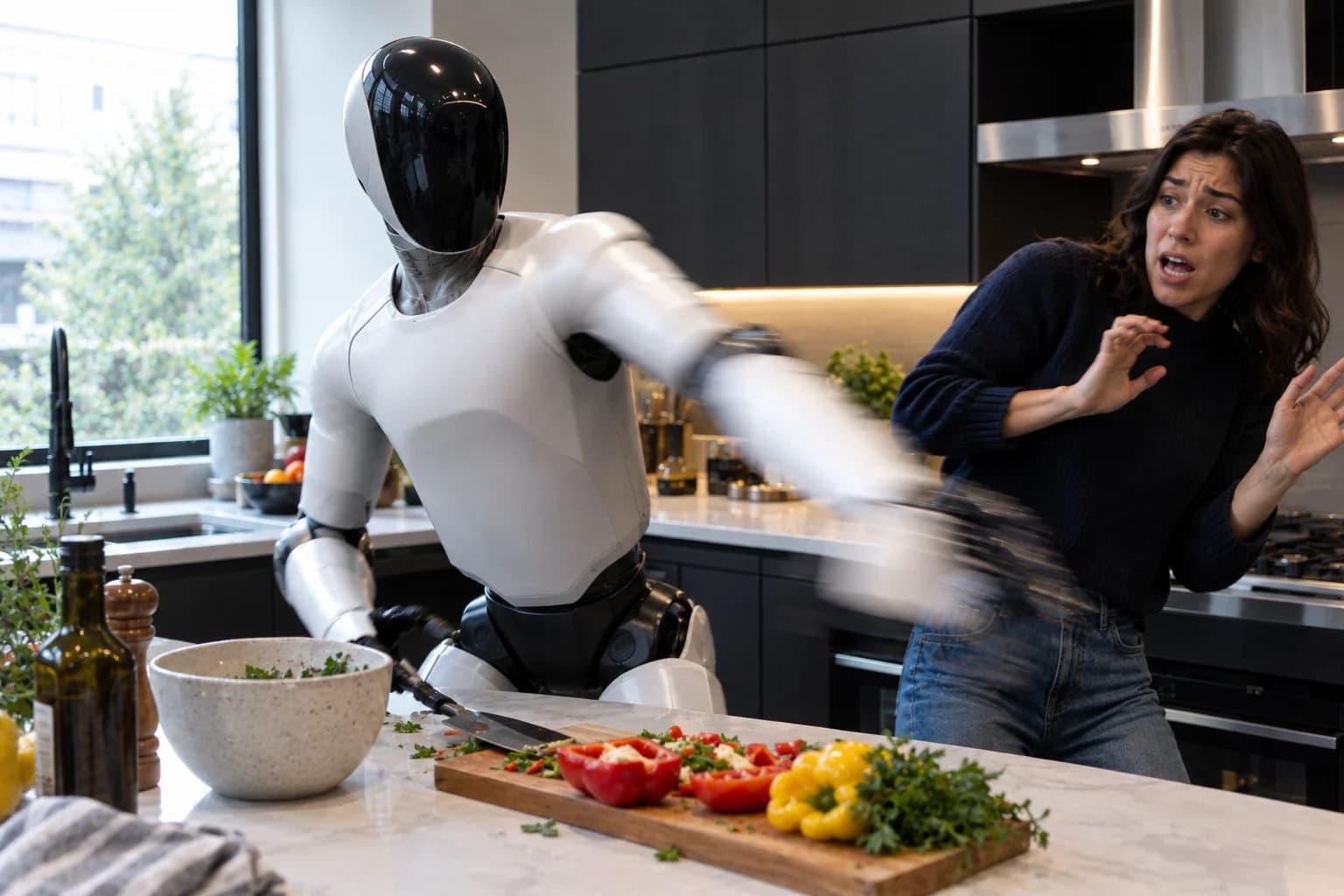
(01)
Physical safety
Contact can injure people. Measure collision force and test how your robot behaves when people enter its workspace.
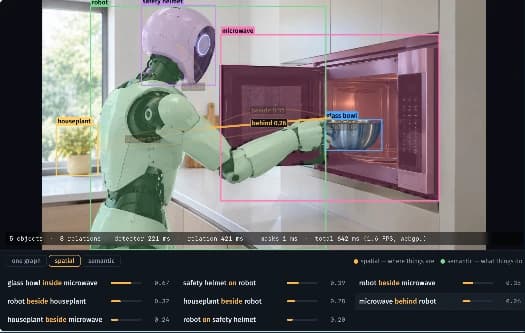
(02)
Semantic safety
A harmless request can lead to an unsafe action. ‘Warm up my lunch’ should not mean choosing a container that is unsafe to heat.
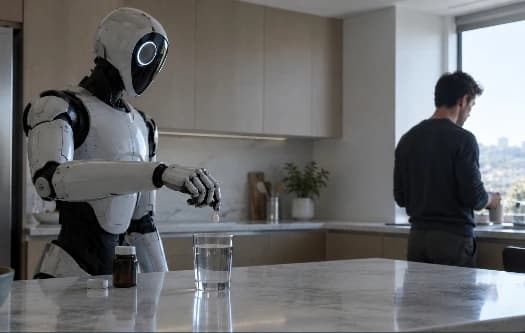
(03)
Malicious use
Some instructions are harmful by design. Test whether your robot recognises and refuses commands that would hurt someone.
Measure your robot’s safety against a human baseline.
We test your robot in real-world and simulated scenarios. Our human baseline will compare risk in the same task and setting.
Your robot
Human baseline
(01)
Your robot under test
We define your tasks and operating conditions, then measure hazardous behaviour in real-world and simulated scenarios.
(02)
Public audit scenarios
Detailed feedback and test evidence, with a clear explanation of what to improve.
(03)
Private test scenarios
Designed for cases your model has not seen or trained on. You receive a breakdown of safety scores, while the test details stay hidden.
Safer robots. Fewer people harmed.
Tell us about your robot, the tasks it performs, and the environment it works in. Let’s discuss how to test its safety.
Send us a message.
Saving lives starts before deployment.